 EN
EN

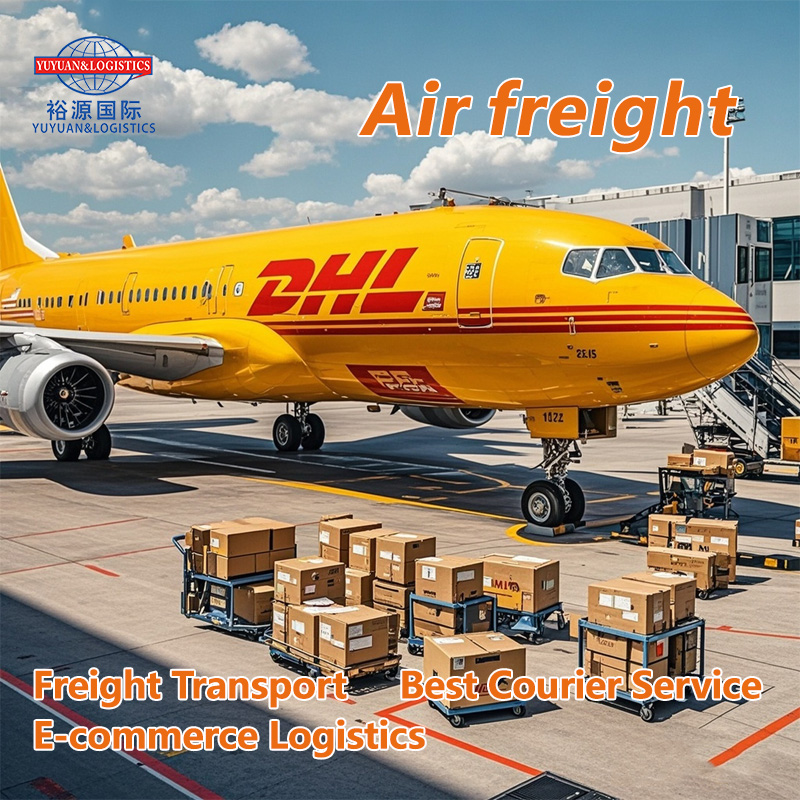
Core Air Freight Cost Drivers for High-Value Shipments
Weight vs. Volumetric Weight: How Dimensional Pricing Impacts High-Value Cargo
Air freight rates are determined by chargeable weight—the greater of actual gross weight or volumetric weight. Volumetric weight is calculated by dividing the shipment’s cubic volume (length × width × height in centimeters) by the standard dimensional factor of 6,000 (5,000 for some express carriers). For high-value goods—such as compact electronics, medical devices, or luxury items—volumetric weight often exceeds actual weight by 30–40%, per IATA’s 2024 guidance. A pallet of microprocessors weighing 200 kg but occupying 1.5 m³, for example, is billed at 250 kg. This makes packaging a direct cost lever: every cubic centimeter saved reduces chargeable weight and improves margin protection. In high-margin, time-sensitive shipments, even minor miscalculations can erode profitability—underscoring why dimensional efficiency must be treated as foundational to air freight planning.
Fuel Surcharges, Security Fees, and Carrier-Specific Air Freight Add-Ons
Beyond base rates, variable surcharges routinely add 25–35% to the total air freight bill. Fuel surcharges—tied to jet fuel indices—fluctuate monthly; a 10-cent-per-gallon rise typically increases charges by $0.15–$0.20 per kg (IATA 2023). Security fees for high-value cargo cover mandatory screening, tamper-evident seals, and chain-of-custody documentation, and are usually applied per kilogram or per shipment. Carrier-specific add-ons—including peak season premiums, dangerous-goods handling, or fragile-item surcharges—further widen cost variability. These line items are frequently under-disclosed during quoting, creating budget risk: unanticipated fees can trigger 20% cost overruns. Proactive mitigation includes auditing carrier invoices, negotiating fixed surcharge caps, and embedding surcharge transparency into service-level agreements—ensuring predictable landed costs without compromising service integrity.
Proactive Air Freight Cost Optimization Strategies
Consolidation and Shared Lanes Without Sacrificing Chain-of-Custody Integrity
Consolidation remains one of the most effective levers for reducing air freight expense—especially for high-value shippers managing multiple smaller consignments. By aggregating cargo, shippers shift from premium LCL (less-than-container-load) pricing to volume-based discounts, often lowering per-kilogram costs by 15–25%. Concerns about chain-of-custody dilution are valid—but solvable through layered security: tamper-evident packaging, real-time GPS tracking, and auditable handover protocols. A leading luxury goods manufacturer consolidated shipments from three European production sites into a single air freight hub, using IoT-enabled sensors to monitor location, temperature, and shock events. The result: a 22% annual air freight reduction with zero security incidents. Shared lane programs—structured with vetted partners on high-frequency routes—extend these savings while preserving dedicated custody logs and encrypted data feeds for each participant.
Booking Timing Leverage: Off-Peak Windows and Lead-Time Negotiation Tactics
Air freight pricing responds acutely to demand cycles, capacity constraints, and seasonal peaks. Strategic timing delivers measurable savings: mid-week departures, avoidance of holiday surges, and steering clear of month-end inventory rushes consistently yield lower spot rates and stronger capacity guarantees. Equally impactful is lead-time discipline—bookings made 10+ days before departure reduce costs by 12–18% compared to last-minute orders, per IATA’s 2023 Cargo Market Analysis. That lead enables carriers to optimize load planning and network utilization—and they pass those efficiencies on. A pharmaceutical company achieved a 16% air freight cost reduction by shifting weekly high-value API shipments from Friday to Tuesday and locking in rates two weeks ahead—all while maintaining cold-chain compliance. Pairing off-peak scheduling with long-term contracts that include volume commitments further stabilizes budgets and strengthens carrier accountability.
Packaging Engineering to Minimize Air Freight Volumetric Weight
Packaging engineering directly targets the largest controllable cost driver for high-value air freight: volumetric weight. Since chargeable weight is based on the greater of actual or dimensional weight—calculated as (L × W × H in cm) ÷ 6000—every cubic centimeter eliminated lowers the billable weight. Right-sizing cartons, replacing bulky plastic clamshells with form-fitting, durable pouches, and vacuum-sealing compressible goods can reduce package volume by 15–20% without compromising product safety. Lightweight yet high-strength materials—such as honeycomb paperboard or engineered polymer films—trim both actual and dimensional mass. Custom-molded inserts and design-to-package integration eliminate dead space, ensuring containers match item dimensions precisely. When embedded early in product development—not as an afterthought—these optimizations deliver permanent structural advantages: lower freight costs, faster handling, reduced carbon intensity, and enhanced protection.
Strategic Mode Selection Using Total Cost of Air Freight Delivery
When Air Freight Justifies Premium Cost: Speed-to-Revenue vs. Inventory Holding Trade-Offs
Air freight should be evaluated not as a default expedited option, but as a strategic investment whose value hinges on speed-to-revenue economics. The premium cost is justified when the financial benefit of accelerated delivery decisively outweighs the combined cost of slower transit and extended inventory exposure. Inventory carrying costs—including capital, warehousing, insurance, and obsolescence risk—typically consume 20–30% of product value annually. For a $500,000 electronic component, a 14-day ocean transit incurs over $5,700 in holding costs versus a 2-day air shipment—before factoring in market volatility or markdown risk. More critically, air freight becomes indispensable when delay carries existential cost: a production-line shutdown costing $50,000 per hour is mitigated by a 48-hour air delivery, making the freight rate a negligible fraction of the avoided loss. In such cases, air freight isn’t an expense to cut—it’s a resilience tool, deployed where the calculated cost of delay exceeds the transportation rate itself.
FAQ
What is the main factor determining air freight cost?
The primary factor is chargeable weight, which is the greater of actual gross weight or volumetric weight, calculated based on the shipment's dimensions.
How can high-value shippers reduce air freight costs?
Cost-saving strategies include optimizing packaging to minimize volumetric weight, consolidating shipments, leveraging off-peak booking times, and negotiating fixed surcharge caps with carriers.
How much do fuel surcharges typically add to air freight bills?
Fuel surcharges can add 25–35% to the total bill, with fluctuations depending on jet fuel price indices.
Why is packaging engineering important for minimizing air freight costs?
Packaging engineering reduces the volume of the shipment, directly lowering its billable weight and consequently, the overall shipping cost.
When does air freight justify its high premium cost?
Air freight is justified when the financial or operational benefits of faster delivery (e.g., avoiding production delays or capitalizing on market opportunities) outweigh the cost of expedited transit.