Railway Freight: Stable & Cost-Effective Cross-Border Logistics Solution for Bulk & Regular Shipments
In the ever-evolving landscape of global logistics, Railway Freight has emerged as a pivotal category that bridges the gap between the speed of Air Freight and the cost efficiency of Sea Freight. As a professional provider of international and domestic Railway Freight services, we recognize that modern businesses—whether manufacturers, distributors, or e-commerce enterprises—need a logistics option that balances reliability, cost, and timeliness, especially for cross-border shipments between continents like Asia and Europe, or long-distance domestic transport. Whether you’re shipping bulk raw materials (steel, coal), finished goods (automobiles, electronics), or regular batches of consumer products to regional warehouses, our Railway Freight solutions are tailored to meet these demands. We integrate an extensive network of railway lines, standardized cargo management processes, and flexible service models to deliver consistent value that supports your supply chain stability and business growth.
Unlike Sea Freight, which is limited by port access and longer transit times, or Air Freight, which is constrained by high costs and weight limits, Railway Freight leverages the advantages of fixed routes, large cargo capacity, and resistance to weather disruptions. Our services cover key cross-border corridors—such as the China-Europe Railway Express (connecting major Chinese cities like Xi’an, Chongqing to European hubs like Hamburg, Duisburg), the Trans-Siberian Railway (linking Asia to Russia and Eastern Europe), and domestic long-distance lines (e.g., China’s Beijing-Guangzhou, Shanghai-Lanzhou railways). We handle diverse cargo types: full container loads (FCL) for large-volume shipments, less than container loads (LCL) for small-batch goods, and specialized cargo (refrigerated goods, hazardous materials) with customized handling protocols. Every step of our Railway Freight process adheres to international railway standards and local regulations, ensuring your cargo moves smoothly from origin to destination.
Core Advantages of Railway Freight: Why Choose Our Railway Freight Services?
1. Balanced Timeliness & Cost: The "Middle Ground" for Efficient Logistics
One of the most compelling advantages of Railway Freight is its ability to strike a perfect balance between transit time and cost—addressing the pain points of businesses that find Air Freight too expensive and Sea Freight too slow.
Faster Than Sea Freight, Cheaper Than Air Freight: For cross-border shipments, Railway Freight cuts transit time by 50%-60% compared to Sea Freight while reducing costs by 40%-60% compared to Air Freight. For example, shipping a 40ft container of electronics from Chongqing to Duisburg via Railway Freight takes 12-15 days and costs approximately $4,000-$5,000. In contrast, Sea Freight for the same cargo would take 30-40 days at $2,500-$3,500, and Air Freight would take 3-5 days but cost over $15,000. This balance makes Railway Freight ideal for businesses that need to replenish inventory regularly without incurring excessive logistics costs—such as a European retailer importing seasonal clothing from China, which can use Railway Freight to get new stock in 2 weeks, avoiding the 1-month wait for Sea Freight or the high cost of Air Freight.
Stable Cost Structure: Unlike Air Freight, whose rates fluctuate sharply with fuel prices and seasonal demand, or Sea Freight, which is affected by port congestion and shipping line surcharges, Railway Freight rates are highly stable. We offer fixed-price contracts for 6-12 months to regular customers, protecting you from sudden market price hikes. A machinery manufacturer in Shandong, for instance, signed a 12-month Railway Freight contract with us for shipments to Russia—locking in rates and avoiding a 10% price increase during peak season, saving over $30,000 annually.
Cost Efficiency for Long Distances: For domestic long-distance shipments (e.g., from China’s northeast to southwest), Railway Freight also outperforms road transport in cost. Shipping 100 tons of coal from Datong to Chengdu via Railway Freight costs about $800-$1,000, while road transport would cost $1,500-$2,000 and take 2-3 more days. This cost advantage is crucial for bulk cargo shippers looking to control long-term logistics expenses.
This balanced value proposition makes Railway Freight the go-to choice for businesses that prioritize both efficiency and cost control.
2. High Stability & Reliability: Minimize Disruptions for Regular Shipments
Railway Freight is renowned for its exceptional stability—far less prone to delays caused by weather, traffic, or port congestion than other logistics modes. This reliability is a game-changer for businesses that rely on regular, on-time deliveries to maintain their supply chains.
Resistance to Weather & Traffic Disruptions: Unlike road transport, which can be halted by heavy rain, snow, or highway accidents, or Sea Freight, which faces risks of storms and port closures, Railway Freight operates on fixed tracks with minimal weather interference. Our Railway Freight shipments have an on-time rate of over 95%, even during harsh seasons. For example, during China’s winter snowstorms, a food distributor in Beijing used our Railway Freight service to ship 50 tons of frozen meat to Harbin—while road transport was delayed by 3-5 days, the railway shipment arrived on time in 2 days, ensuring no stockouts at local supermarkets.
Avoidance of Port Congestion: Cross-border Sea Freight often faces long delays due to port congestion (e.g., European ports like Rotterdam or Chinese ports like Shanghai during peak seasons). Railway Freight bypasses these bottlenecks by delivering cargo directly to inland hubs. A German auto parts importer, for instance, switched from Sea Freight to our Railway Freight service for shipments from Wuhan to Berlin—instead of waiting 7-10 days for cargo to clear congested ports, the railway shipment arrives at Berlin’s inland container terminal in 14 days, with no port-related delays.
Standardized Operations: We follow strict, standardized processes for Railway Freight—from cargo loading and documentation to customs clearance and unloading. Every container is inspected for damage before shipment, and cargo is secured with anti-shift devices to prevent damage during transit. Our Railway Freight cargo damage rate is less than 0.1%, well below the industry average for road transport (0.5%) and Sea Freight (0.3%).
For businesses with regular shipment schedules (e.g., weekly or monthly deliveries), this stability ensures predictable supply chain operations and reduces the risk of lost sales due to delays.
3. Large Cargo Capacity: Accommodate Bulk & Oversized Goods
Railway Freight boasts impressive cargo capacity, making it an ideal choice for shipping bulk goods, heavy equipment, or large quantities of finished products—capabilities that exceed road transport and complement Sea Freight.
Standard Container Capacity: Our Railway Freight services support 20ft and 40ft standard containers, with a single freight train capable of carrying 50-100 containers (equivalent to 1,000-2,000 tons of cargo). For example, a steel mill in Shanxi ships 2,000 tons of steel coils to a construction site in Guangzhou every month via our Railway Freight service—using 100 20ft containers on 2 trains, which is far more efficient than arranging 50+ road trucks (which would take 3x longer and cost 2x more).
Oversized & Heavy Cargo Support: For goods that exceed standard container dimensions—such as industrial machinery (bulldozers, generators) or large-scale equipment (wind turbine parts)—we use specialized railway flatcars and open-top containers. A renewable energy company in Gansu, for instance, relied on our Railway Freight service to ship 20 wind turbine nacelles (each 15 meters long, 30 tons heavy) to Inner Mongolia—our team coordinated with railway authorities to secure specialized flatcars and design safe loading plans, ensuring the cargo arrived intact in 3 days.
Bulk Cargo Handling: For unpackaged bulk goods (grain, coal, minerals), we use dedicated hopper cars and covered wagons that allow for efficient loading and unloading via conveyors. A wheat exporter in Heilongjiang ships 1,500 tons of wheat to Shanghai every week via our Railway Freight service—using 30 hopper cars that can be loaded in 1 day and unloaded in 6 hours, far faster than the 3-4 days required for road transport.
This large capacity enables businesses to move massive volumes of cargo in a single shipment, reducing the number of trips needed and simplifying logistics management.
4. Cross-Border Connectivity: Bridge Inland Regions & Global Markets
Railway Freight excels at connecting inland regions to global markets—addressing the "last-mile" challenge for businesses located far from ports. This is particularly valuable for cross-border trade between Asia and Europe, where many manufacturing hubs and consumer markets are inland.
Coverage of Inland Hubs: Our Railway Freight network includes over 200 inland container terminals worldwide—from Xi’an and Chongqing in China to Duisburg and Warsaw in Europe, and Moscow in Russia. A furniture manufacturer in Chengdu (an inland Chinese city) uses our Railway Freight service to ship 100 containers of furniture to Paris every month—instead of transporting goods to a coastal port (3-4 days by road) and then via Sea Freight (30 days), the railway shipment takes just 16 days, cutting total transit time by 50%.
Simplified Cross-Border Procedures: Cross-border Railway Freight involves complex customs clearance between multiple countries (e.g., China, Kazakhstan, Russia, Germany for China-Europe routes). Our professional customs brokerage team handles all of this, with in-depth knowledge of the regulations of each country along the route. We prepare all necessary documents (certificates of origin, customs declarations, dangerous goods permits) and coordinate with customs authorities at border crossings (e.g., Alashankou between China and Kazakhstan) to ensure smooth clearance. A tech company in Shenzhen shipping smartphones to Moscow via our Railway Freight service experiences customs clearance in just 24 hours—far faster than the 3-5 days often required for Sea Freight.
Regular Departure Schedules: Unlike Sea Freight, which has irregular departure times based on vessel availability, our Railway Freight services operate on fixed weekly or bi-weekly schedules. For example, our China-Europe Railway Freight trains depart Xi’an every Monday and Thursday, with a guaranteed ETA (estimated time of arrival) in Duisburg 14 days later. This regularity allows businesses to plan their production and inventory more accurately—an e-commerce seller in Berlin, for instance, places orders with Chinese suppliers 16 days before their sales peak, knowing the railway shipment will arrive on time.
For businesses in inland regions or those targeting inland markets, Railway Freight is the most efficient way to connect to global trade.
Process Advantages of Our Railway Freight Services: From Booking to Delivery
Beyond the inherent advantages of Railway Freight itself, our service process is optimized to deliver efficiency, transparency, and peace of mind—addressing common pain points like complex cross-border procedures and unclear cargo tracking, and setting us apart from ordinary Railway Freight providers.
1. One-Stop Railway Freight Management: Simplify End-to-End Logistics
We offer comprehensive, end-to-end Railway Freight management—covering every step from cargo booking to final delivery—so you don’t have to coordinate with multiple parties (local transporters, railway operators, customs brokers, inland terminals). Our process includes:
Personalized Consultation & Planning: Our Railway Freight experts work with you to design a tailored plan—helping you choose between FCL/LCL, select the optimal route (e.g., China-Europe Railway Express vs. Trans-Siberian Railway), and schedule shipments based on your delivery needs. For example, if you’re shipping goods from Chongqing to Warsaw, we’ll compare a direct railway route (12 days, higher cost) and a combined railway-road route (15 days, lower cost) to help you make the best choice for your budget and timeline.
Cargo Pickup & Preparation: We arrange for professional drivers to pick up your cargo from your warehouse or factory, using vehicles that match your cargo type (e.g., refrigerated trucks for perishables, flatbed trucks for oversized goods). Our team then inspects, packages, and labels your cargo according to railway standards—for fragile goods, we use shock-absorbing foam and reinforced packaging; for hazardous materials, we apply compliance labels and secure them in specialized containers.
Railway Booking & Documentation: We have exclusive partnerships with major railway operators (e.g., China Railway Express, DB Schenker Rail), allowing us to secure priority container space—even during peak seasons (e.g., pre-Christmas or Chinese New Year). Our documentation team handles all paperwork, including the railway bill of lading, commercial invoice, packing list, and cross-border customs forms—ensuring accuracy to avoid delays.
Cross-Border Customs Clearance: Our in-house customs team manages clearance at every border crossing along the Railway Freight route. We are familiar with the customs regulations of over 30 countries (e.g., China’s customs requirements for exports, Kazakhstan’s import duties, EU’s VAT rules) and can resolve issues like document discrepancies or inspection requests quickly. For a textile exporter in Hangzhou shipping to Munich, our team completes customs clearance at 3 border crossings (China-Kazakhstan, Kazakhstan-Russia, Russia-Belarus) in just 48 hours.
Inland Delivery & Devanning: Once your cargo arrives at the destination inland terminal, we coordinate with local partners to transport it to the final recipient—whether it’s a warehouse, store, or factory. We also offer devanning (unloading) services for containers, saving you the hassle of arranging separate unloading equipment. A toy distributor in Madrid, for example, receives monthly shipments via our Railway Freight service—we deliver the containers directly to their warehouse and unload the toys, allowing them to restock shelves within 24 hours.
This one-stop service eliminates the complexity of managing cross-border railway logistics, saving you time and reducing the risk of errors.
2. Advanced Tracking & Visibility: Stay in Control of Your Shipment
We understand that long cross-border transit times can make Railway Freight feel unpredictable—so we leverage advanced technology to provide real-time tracking and full visibility of your cargo.
Global Railway Freight Tracking Platform: Our cloud-based platform allows you to monitor your shipment 24/7 from any device. You can view key information such as:
Current location (e.g., "Crossing China-Kazakhstan border," "En route to Warsaw terminal");
Estimated time of arrival (ETA) at each stop and the final destination;
Customs clearance status (e.g., "Cleared at Alashankou border," "Pending inspection in Moscow");
Cargo condition (for refrigerated goods, you can check real-time temperature data).
We also send automated notifications via email or SMS for critical milestones—such as when the shipment departs the origin terminal, clears a border, or arrives at the destination.
Proactive Issue Resolution: Our customer service team monitors your Railway Freight shipment in real time and addresses potential issues before they cause delays. For example, if a railway line in Kazakhstan is temporarily closed due to maintenance, our team will immediately reroute your shipment via an alternative line and update your ETA—ensuring minimal disruption to your plans.
Transparent Reporting: At the end of each month, we provide a detailed Railway Freight report summarizing your shipment volume, delivery times, costs, and any issues encountered. This helps you analyze your logistics performance, identify areas for optimization (e.g., adjusting shipment frequencies), and make data-driven decisions for future orders.
This level of visibility gives you peace of mind and allows you to plan your business operations with confidence.
3. Specialized Cargo Solutions: Tailored Support for Unique Needs
Not all cargo fits into standard containers—and our Railway Freight services are designed to handle specialized cargo with customized solutions, addressing the unique needs of different industries.
Refrigerated Railway Freight: For temperature-sensitive goods (e.g., fresh food, pharmaceuticals, flowers), we use refrigerated containers (reefers) with precise temperature control (ranging from -25℃ to 25℃). Our reefers are equipped with GPS-enabled temperature monitors, and we coordinate with railway operators to ensure continuous power supply during transit. A fruit exporter in Yunnan uses our refrigerated Railway Freight service to ship 20 tons of fresh mangoes to Moscow— the mangoes arrive in 12 days with a freshness rate of over 90%, compared to 70% via Sea Freight.
Hazardous Goods Railway Freight: For dangerous goods (e.g., lithium batteries, chemicals, flammable materials), we comply with the International Carriage of Dangerous Goods by Rail (RID) regulations. Our team classifies the goods, uses specialized containers (e.g., anti-corrosive containers for chemicals), and coordinates with railway authorities to secure necessary permits. A battery manufacturer in Guangdong ships lithium-ion batteries to Berlin via our Railway Freight service—we ensure full compliance with RID rules, avoiding customs detention and safety risks.
Oversized & Heavy Cargo Solutions: For goods that exceed standard dimensions (e.g., industrial machinery, construction equipment), we use specialized railway cars (flatcars, open-top cars) and design custom loading plans. Our team works with railway engineers to ensure the cargo is balanced and secured properly, preventing damage during transit. A construction company in Poland used our Railway Freight service to ship a 50-ton crane from Shanghai—we arranged for a specialized flatcar, secured the crane with steel cables, and coordinated with railway authorities for oversized cargo clearance, ensuring safe delivery in 16 days.
These specialized solutions mean you don’t have to compromise on your Railway Freight needs—no matter how unique your cargo is.
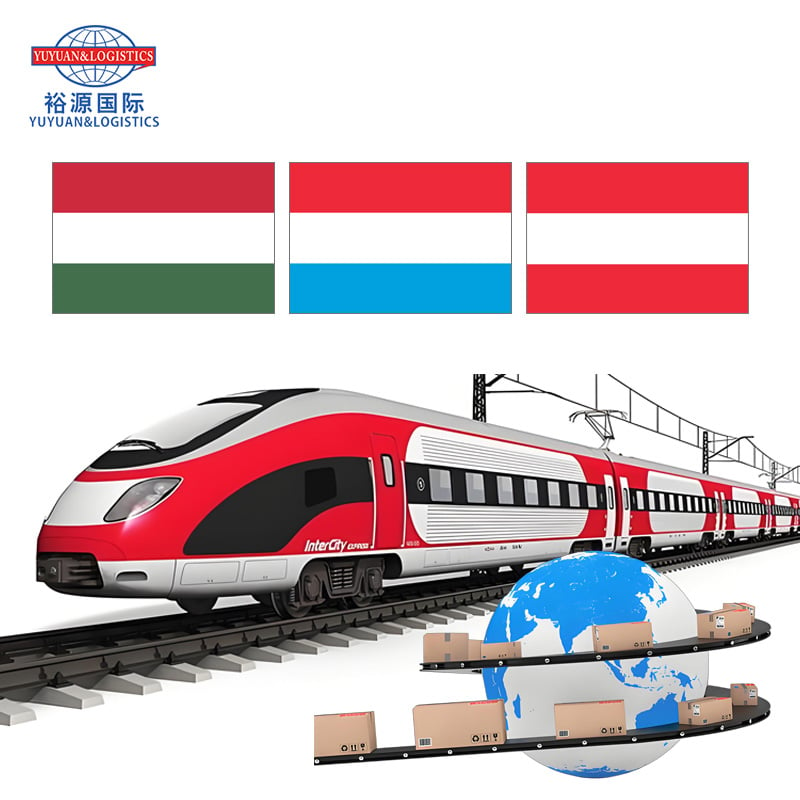

Large transport capacity、Low cost、Strong adaptability、High stability

Strong flexibility、High timeliness、Convenient operation、Wide adaptability to different batch sizes
Extremely fast speed, wide coverage, high security, low packaging requirements, and quick supply chain response.
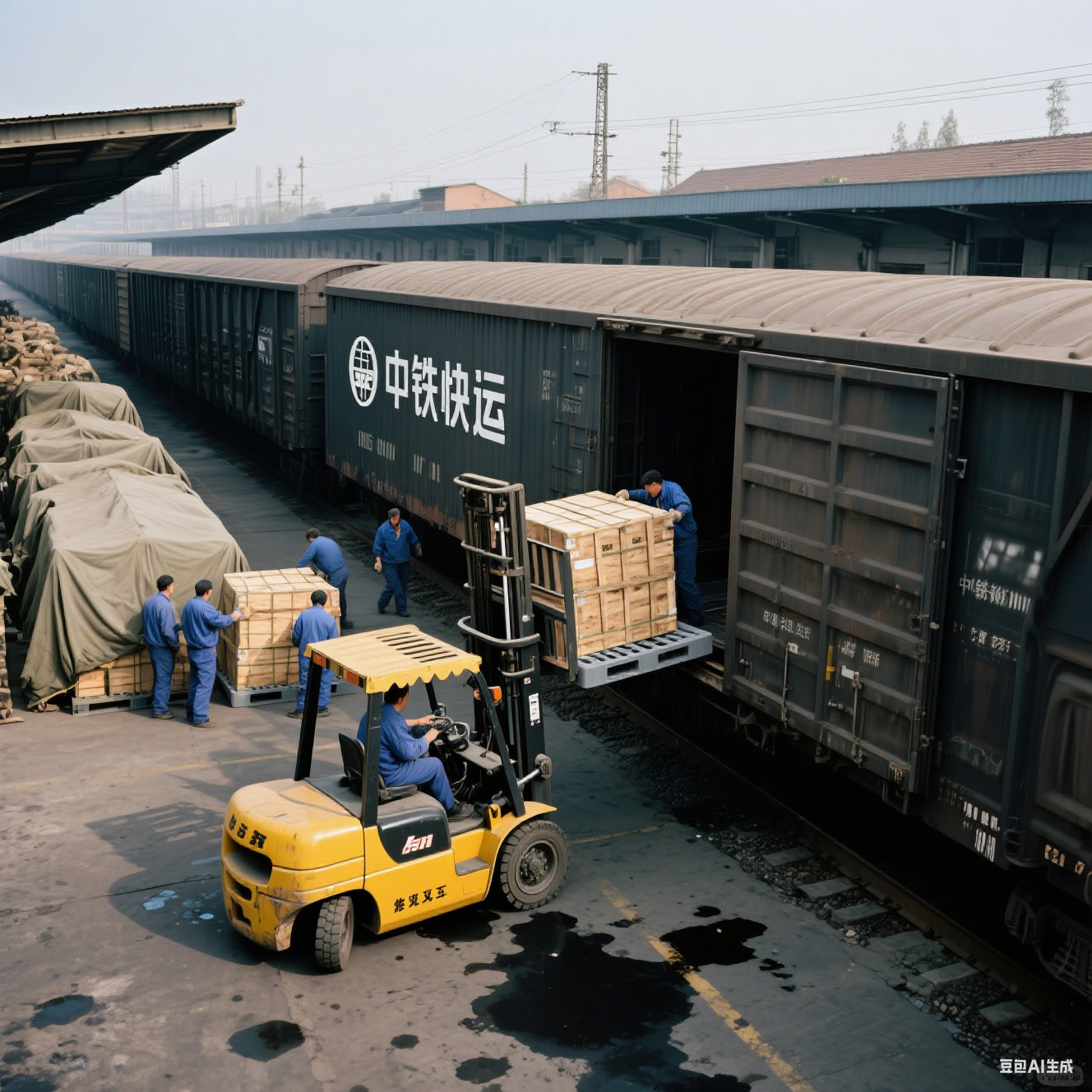
High volume of transportation, strong stability, moderate cost, wide coverage, excellent environmental performance

Guangzhou Yuyuan Cross Border E-Commerce Co., Ltd. provides cross-border e-commerce solutions for global B2B trade. Our integrated logistics and customs clearance ensure fast, compliant international shipping. Trusted by exporters worldwide. Start selling globally today.
China Guangdong Room 101, No. 11, Xinkexia Xincun Street, Jiahe Street
Copyright © 2025 by Guangzhou Yuyuan Cross Border E-Commerce Co., Ltd. Privacy Policy
 EN
EN