 EN
EN

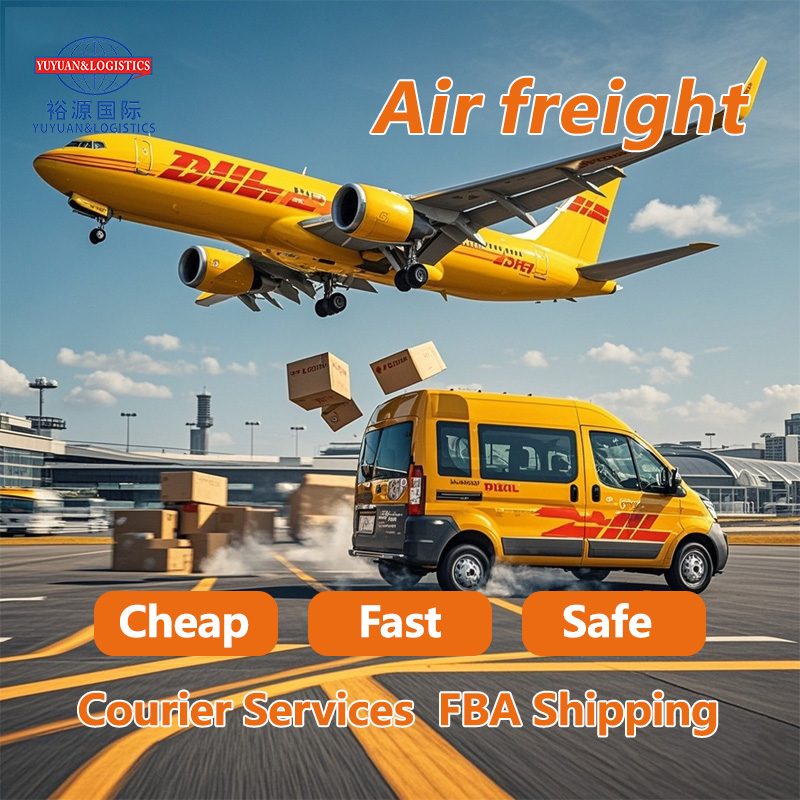
Air Freight: Speed and Reliability for Time-Sensitive International Transportation
When to Choose Air Transportation: High-Value Goods, Perishables, and Urgent Deliveries
Air freight is the optimal international transportation mode for cargo where time equals money. High-value products like semiconductors, pharmaceuticals, and luxury goods often justify the steep cost because their profit margins absorb the premium. For example, a typical smartphone shipment valued at $500,000 can lose 0.5% of value per day of delay—making air’s 1–3-day transit from Asia to Europe a strategic necessity. Perishables—including fresh seafood, cut flowers, and seasonal fruits—depend on this speed to preserve shelf life; in 2023, air cargo handled over 52 million tons of perishable goods (IATA). Urgent deliveries, such as replacement parts for automotive assembly lines or critical medical devices, avoid costly production stoppages. Airlines’ fixed schedules and stringent security protocols support a 99.5% on-time delivery rate (2022 industry data), reinforcing air freight’s role in Just-in-Time (JIT) inventory models and resilient supply chains.
Operational Constraints and Environmental Impact of Air Transportation
Air freight faces significant operational constraints. Aircraft belly and freighter capacity is inherently limited—a typical wide-body freighter carries about 130 tons, dwarfed by a container ship’s 20,000+ TEU capacity. Congestion at major cargo hubs can extend ground handling times, while strict weight and dimensional limits exclude bulk or oversized commodities. These constraints drive rates, which averaged $1.50 per kg in 2023—multiple times ocean shipping costs—and confine air freight to high-value, time-sensitive cargo. Environmentally, air transport remains highly intensive: it emits roughly 47 times more CO₂ per ton-kilometer than ocean freight (ITF 2022) and accounts for approximately 2% of global energy-related CO₂ emissions (IEA 2023). Though newer widebody freighters offer up to 20% better fuel efficiency, the sector’s carbon footprint remains substantial. Sustainable aviation fuels (SAF) and operational optimizations are advancing—but SAF still represents less than 1% of total jet fuel use. Logistics managers must therefore weigh speed and reliability against sustainability targets and total landed cost.
Ocean Freight: Cost-Efficient International Transportation for High-Volume Shipments
Containerization, Port Infrastructure, and Global Trade Dependence on Sea Transportation
Ocean freight serves as the backbone of global commerce, moving approximately 80% of international trade by volume. Its efficiency stems from standardized containerization—whether Full Container Load (FCL) or Less-than-Container Load (LCL)—enabling seamless handling of high-volume, heavy, or oversized cargo across industries. As detailed in Maersk’s logistics transport analyses, ocean transport delivers the lowest cost per unit for long-distance shipments, making it the default choice for budget-conscious, non-urgent supply chains. Port infrastructure acts as the critical node: major hubs process millions of twenty-foot equivalent units (TEUs) annually using automated cranes and deep-water berths. This enables ultra-large container vessels to carry over 20,000 TEUs per voyage—achieving economies of scale unmatched by rail or air. Despite slower transit times, ocean freight’s flexibility (including safe transport of dangerous goods) and lowest greenhouse gas emissions per ton-mile solidify its indispensable role in sustaining global trade and industrial supply chains.
Rail Freight: Strategic International Transportation Across Land Corridors
Eurasian Land Bridge and EU–Asia Rail Networks: Capacity, Transit Times, and Regulatory Coordination
The Eurasian Land Bridge has emerged as a vital corridor for international transportation, linking Asian manufacturing centers with European markets. The China–Europe Railway Express alone moved over 1.6 million TEUs in 2023—fueled by expanding double-stack capacity and electrified routes. Transit times of 12 to 18 days across the 10,000-kilometer route offer a strategic middle ground between air freight (5–7 days) and ocean shipping (30–45 days). This speed-to-cost balance makes rail especially attractive for electronics, automotive components, and temperature-sensitive goods. Seamless movement requires rigorous regulatory coordination: historical gauge breaks at the China–Kazakhstan and Belarus–Poland borders caused delays, but harmonized customs procedures and digital waybills under the CIM/SMGS common consignment note have significantly reduced transfer times. Ongoing port and inland terminal upgrades further expand corridor capacity—supporting rail’s growing share of intermodal freight and strengthening its role as a resilient alternative amid maritime congestion and geopolitical volatility.
Selecting the Right International Transportation Mode: A Decision Framework
Choosing the optimal international transportation mode demands a structured, multi-factor analysis that goes beyond simple cost comparison. Shipment characteristics—size, weight, value, fragility, and perishability—must be weighed against required transit times, delivery flexibility, and customer service expectations. Equally important are network considerations: port infrastructure, rail connectivity, and air-freight handling capacity at origin and destination. A systematic decision framework helps balance these variables, ensuring alignment with both operational budgets and strategic supply chain goals.
A practical starting point is evaluating each mode across key dimensions that drive total logistics performance. The table below summarizes the relative strengths of air, ocean, and rail freight:
| Decision Factor | Air Freight | Ocean Freight | Rail Freight |
|---|---|---|---|
| Cost per unit | High | Low | Medium |
| Transit speed | Fast (1–3 days intercontinental) | Slow (20–45 days intercontinental) | Medium (12–20 days EU–Asia) |
| Capacity | Low – limited by aircraft hold size | Very high – full container loads | Medium – block trains carry hundreds of TEUs |
| Reliability | High – fixed schedules, rare delays | Moderate – subject to weather, port congestion | High – dedicated corridors, predictable schedules |
| Environmental impact | Highest CO₂ per ton-km | Lowest CO₂ per ton-km among the three | Lower than air, higher than sea (per ton-km) |
| Best for | High-value, time-sensitive, perishable goods | Large-volume, non-urgent shipments | Continental land bridges, bulk commodities, time-definite deliveries |
By mapping specific cargo profiles and service requirements against this framework, logistics teams can quickly narrow viable options. For instance, electronics components with a tight production deadline favor air freight despite higher cost, while a full container of consumer goods destined for seasonal restock is best served by ocean freight. Rail becomes the strategic choice when overland routes deliver a balanced blend of speed, cost, and reliability—particularly along corridors like the Eurasian Land Bridge.
Ultimately, the right transportation mode is the one that consistently meets the business’s definition of value: a deliberate blend of cost efficiency, delivery reliability, and minimal supply chain disruption. Regularly revisiting the decision framework against evolving market conditions, fuel prices, and carrier service offerings ensures international transportation choices remain optimized over time.
FAQ Section
1. What are the main advantages of air freight?
Air freight offers speed and reliability for time-sensitive international transportation, making it ideal for high-value or perishable goods and urgent deliveries.
2. Why is ocean freight the preferred mode for high-volume shipments?
Ocean freight provides cost-efficient transit for large-volume and non-urgent cargo due to economies of scale achieved through containerization and port infrastructure systems.
3. What makes rail freight a strategic option for land routes?
Rail freight balances speed, cost, and reliability, particularly for continental shipments along land corridors like the Eurasian Land Bridge.
4. How can businesses select the optimal transportation mode?
Businesses should analyze shipment characteristics, transit time requirements, budget constraints, and environmental impact to choose the mode that aligns with their strategic goals.
Table of Contents
- Air Freight: Speed and Reliability for Time-Sensitive International Transportation
- Ocean Freight: Cost-Efficient International Transportation for High-Volume Shipments
- Rail Freight: Strategic International Transportation Across Land Corridors
- Selecting the Right International Transportation Mode: A Decision Framework
- FAQ Section